Resin vs Plastic: Which Material Is Best for 3D Figures?
Compare resin and plastic custom 3D figures by detail, surface finish, durability, weight, repair needs, and best display use cases.
Published
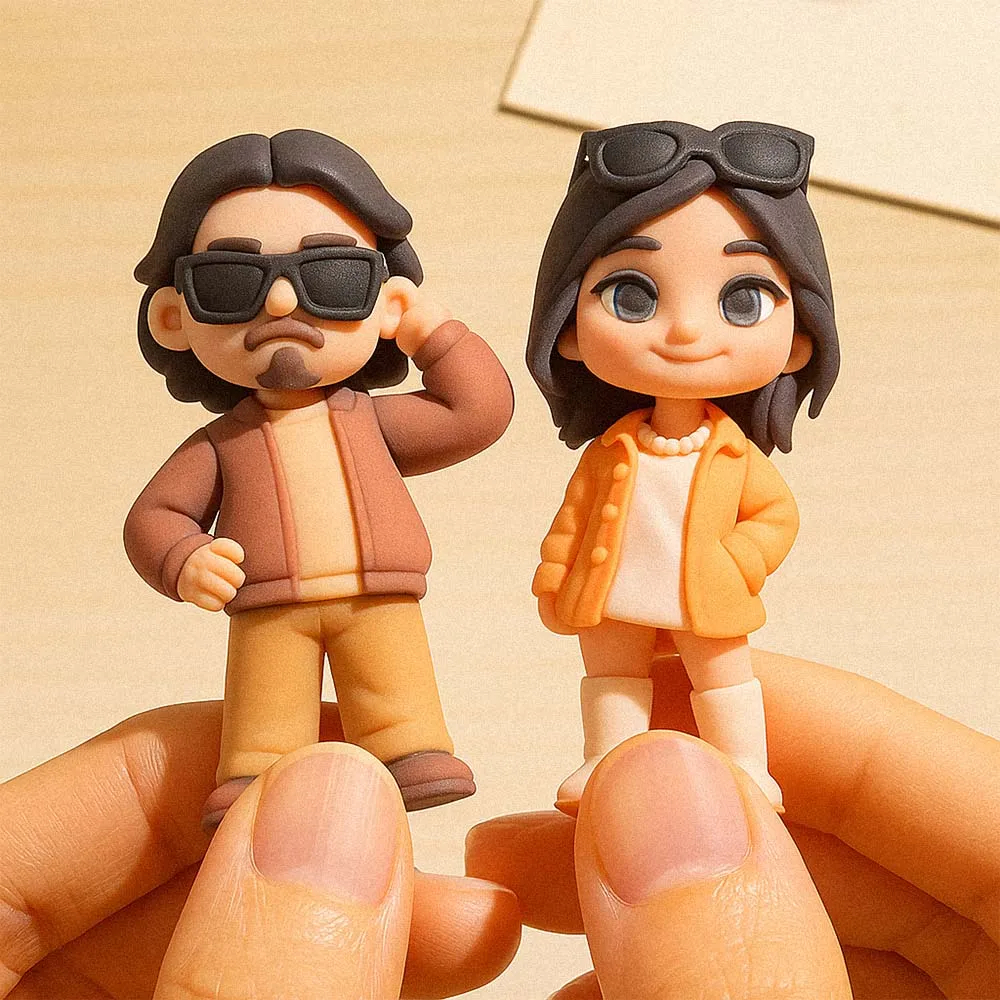
Material choice affects how a custom 3D figure looks, feels, and survives daily display. Resin and plastic can both be useful, but they are not equal for every gift or figure style.
When ordering a custom 3D figure, the better material depends on detail level, pose, size, handling, and how the piece will be displayed.
Resin Is Strong for Fine Detail
Resin is often preferred when the figure needs crisp facial detail, small accessories, clothing texture, hair shape, or a polished display finish. It can make a miniature portrait feel more refined.
Plastic Can Be Practical for Simpler Shapes
Plastic may be useful for lightweight parts, simpler display pieces, or designs where fine surface detail is less important. It can also be more forgiving in some handling situations, depending on the exact material and printing process.
Durability Depends on Design
Material matters, but pose matters too. Thin ankles, raised arms, long props, and unsupported accessories are more fragile in any material. A compact pose with a stable base is usually safer.
Choose Based on the Gift Purpose
For wedding toppers, milestone gifts, retirement figures, and detailed likeness pieces, resin is often the stronger choice. For simple novelty designs, plastic may be acceptable if the surface finish and detail expectations are lower.
You can compare this with why resin is often preferred and the custom figure material guide.
FAQ
Is resin always better than plastic?
No. Resin is often better for detail and display finish, but the best choice depends on design, size, and handling needs.
Which material breaks more easily?
Fragility depends on both material and shape. Thin unsupported parts are risky in any material.
Which material looks more premium?
Resin usually gives a more detailed and polished display look for custom figures.